


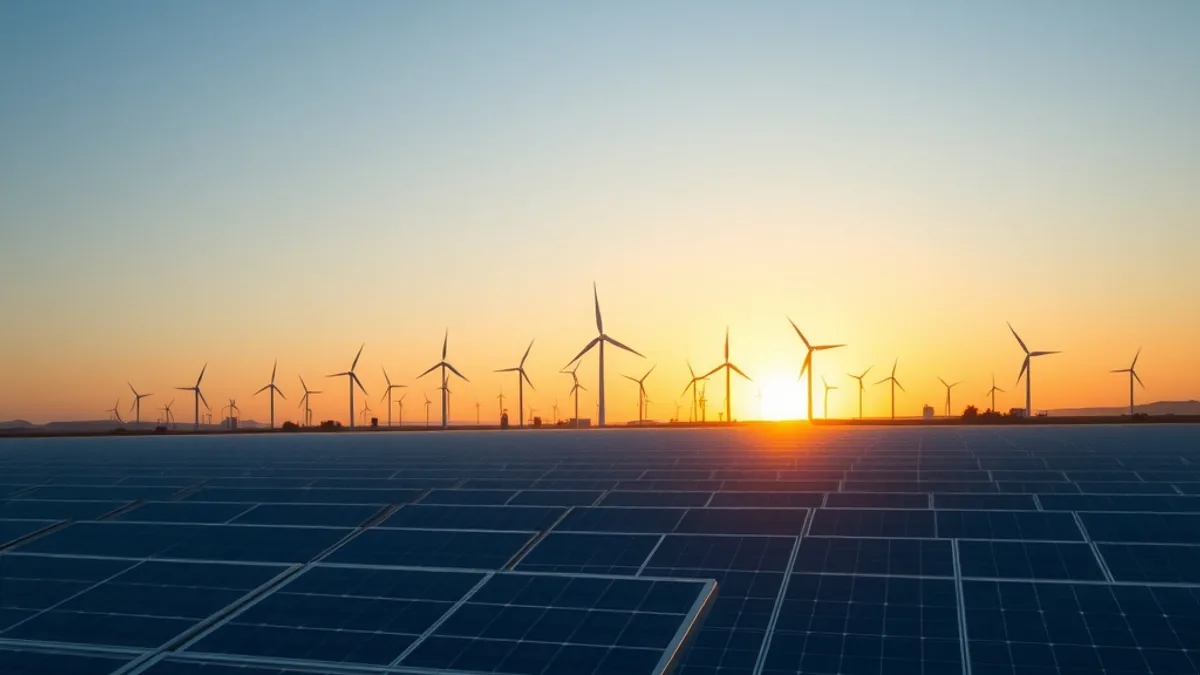
Renewable energy has crossed from promising to dominant. In most of the world, new solar and wind generation is now the cheapest source of new electricity — a fact that has restructured investment decisions far faster than policy debates predicted.
Why the economics changed
The cost of solar modules has fallen by roughly 90% since 2010, driven by manufacturing scale and incremental efficiency gains rather than any single breakthrough. Wind turbines have followed a similar curve. When the cheapest new power plant is also the cleanest, adoption stops being a moral question.
Solar
Utility-scale solar is now routinely built at costs that undercut new gas generation. Rooftop solar shifts the economics to households, particularly where electricity prices are high and financing is available.
Wind
Offshore wind delivers higher and steadier capacity factors than onshore, at higher installation cost. It has become the backbone of several national decarbonisation plans in Europe and Asia.
Hydro and geothermal
Both provide dispatchable, low-carbon power that complements variable sources. Hydro's constraint is geography and ecological impact; geothermal's is drilling cost and site availability.
The storage problem
Sun does not always shine and wind does not always blow. Batteries have become dramatically cheaper and are now being deployed at grid scale, but long-duration storage — the kind needed to cover a windless week — remains the open engineering challenge.
Grids, not generation
The bottleneck has moved. Transmission capacity, interconnection queues and permitting now delay projects more than technology or capital. Modernising the grid is unglamorous and decisive.
What individuals can do
- Switch to a supplier with a verified renewable tariff.
- Electrify heating and transport where the grid is already clean.
- Reduce peak demand — timing matters as much as total consumption.
- Support planning reform, which is currently the binding constraint.
The direction of travel is settled. What remains is speed.



Comments (0)
Please sign in or create an account to leave a comment.
No comments yet
Be the first to share your thoughts.