


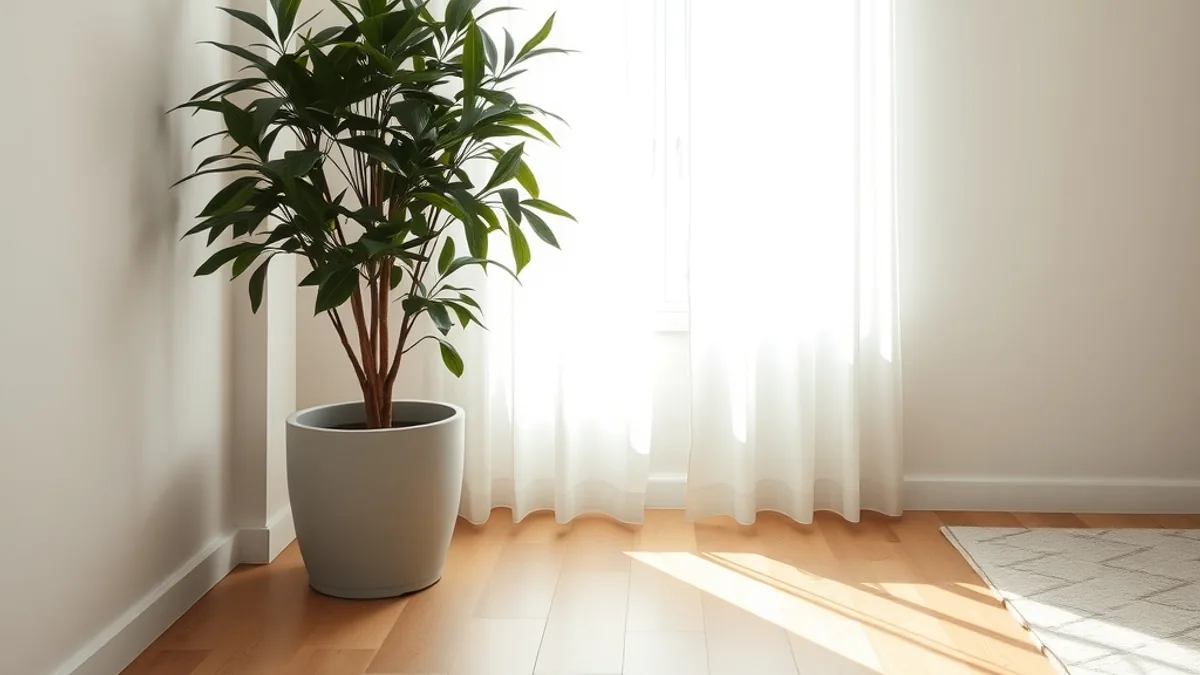
The popular image of minimalism — empty white rooms and a single chair — misses the point entirely. Real minimalism is a filter, not an aesthetic. It asks one question of every object in your home: does this earn its place?
Start with one surface
Pick a single surface: a kitchen counter, a bedside table, a desk. Clear it completely. Put back only what you have used in the last week. Live with it for a few days. This is the smallest possible experiment, and it usually produces an immediate, disproportionate sense of calm.
The four-box method
When you are ready to tackle a room, bring four boxes: keep, relocate, donate, discard. Work in small time blocks — twenty minutes is plenty. The rule that matters is that the "keep" box has to be genuinely small. If everything is a keep, you have not decided anything.
One in, one out
The single most effective maintenance rule. Anything new that enters the house displaces something else. It works because it forces a comparison at the moment of acquisition, when you are most honest about whether you need it.
Give everything a home
Clutter is usually homeless objects, not too many objects. A permanent place for keys, mail and chargers eliminates most of the visible mess in a home. Storage you cannot see into is storage you will fill without thinking.
Buy less, choose better
Minimalism is expensive if you approach it as a shopping project. The opposite is true: it usually means buying fewer things and keeping them longer. A well-made item you use daily costs less per use than three cheap replacements.
Protect the calm
The point of clearing space is what it does for attention. A tidy desk, a clear counter and a bedroom with nothing in it but a bed all reduce the background load on your mind. That is the actual benefit — not the photographs.


Comments (0)
Please sign in or create an account to leave a comment.
No comments yet
Be the first to share your thoughts.